
 فارسی
فارسی 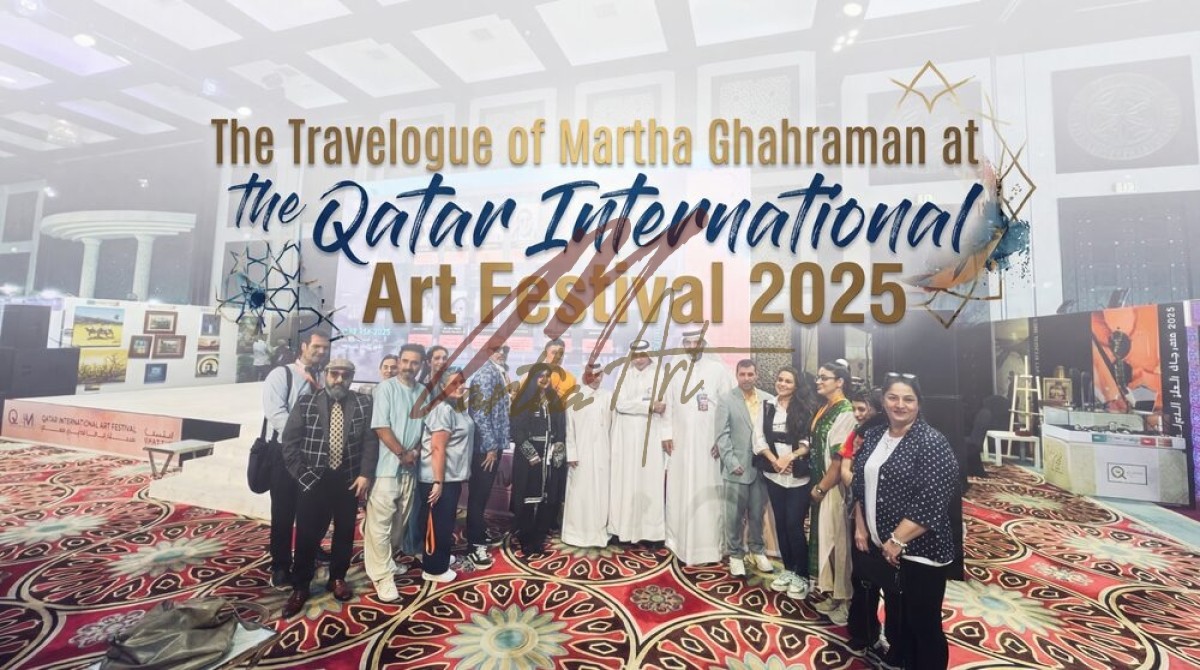
From Woven Memory to Global Horizons: The Travelog of Martha Ghahraman at the Qatar International Art Festival 2025
A painter’s journey at QIAF 2025, where three artworks, cultural dialogue, and a conscious return shape a global artistic experience.
Travel, for me, never truly begins at an airport. It starts earlier — at the moment an image refuses to leave my mind, when a texture, a color, or a quiet idea keeps returning, asking to be translated into paint. Doha, in December 2025, was already forming in my imagination long before I arrived. This was my second participation in the Qatar International Art Festival (QIAF), following my earlier presence at QIAF 2024. Returning in 2025 felt less like repetition and more like continuation — a deeper, more conscious step along a path already underway.
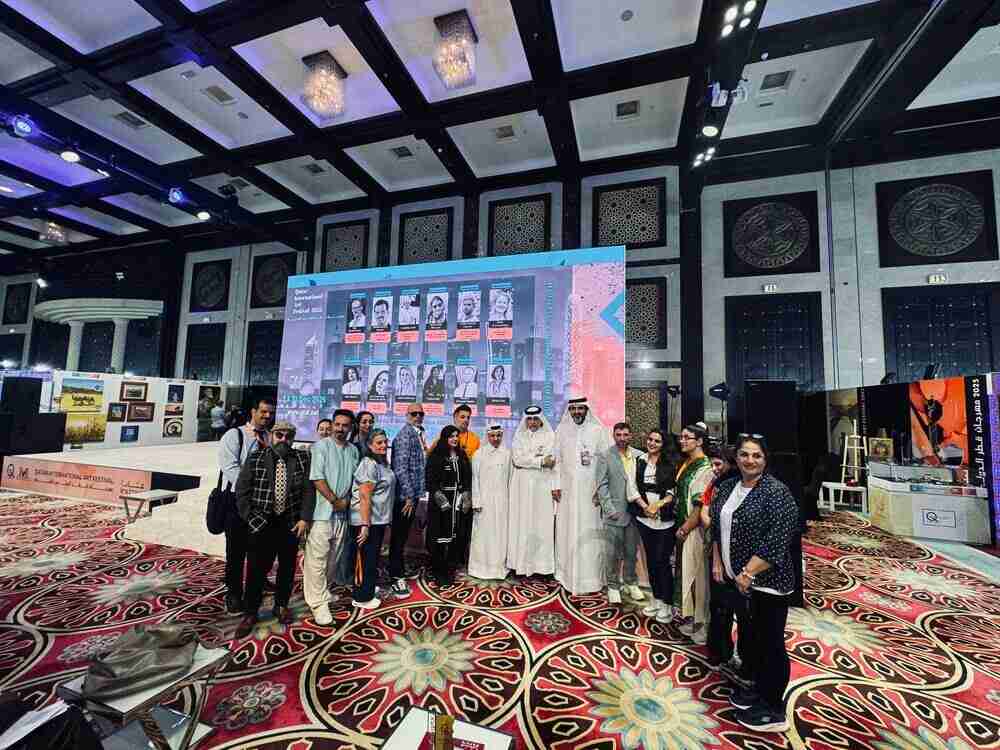
Held from December 7 to December 12, 2025, the Qatar International Art Festival 2025 once again proved itself to be far more than a conventional exhibition. It functioned as a living example of cultural diplomacy, a space where artists from across the world converged not simply to display works, but to engage in dialogue. Here, art transcended borders, languages, and assumptions, becoming a shared visual conversation between cultures, histories, and contemporary perspectives.
Returning with Intention: From QIAF 2024 to QIAF 2025
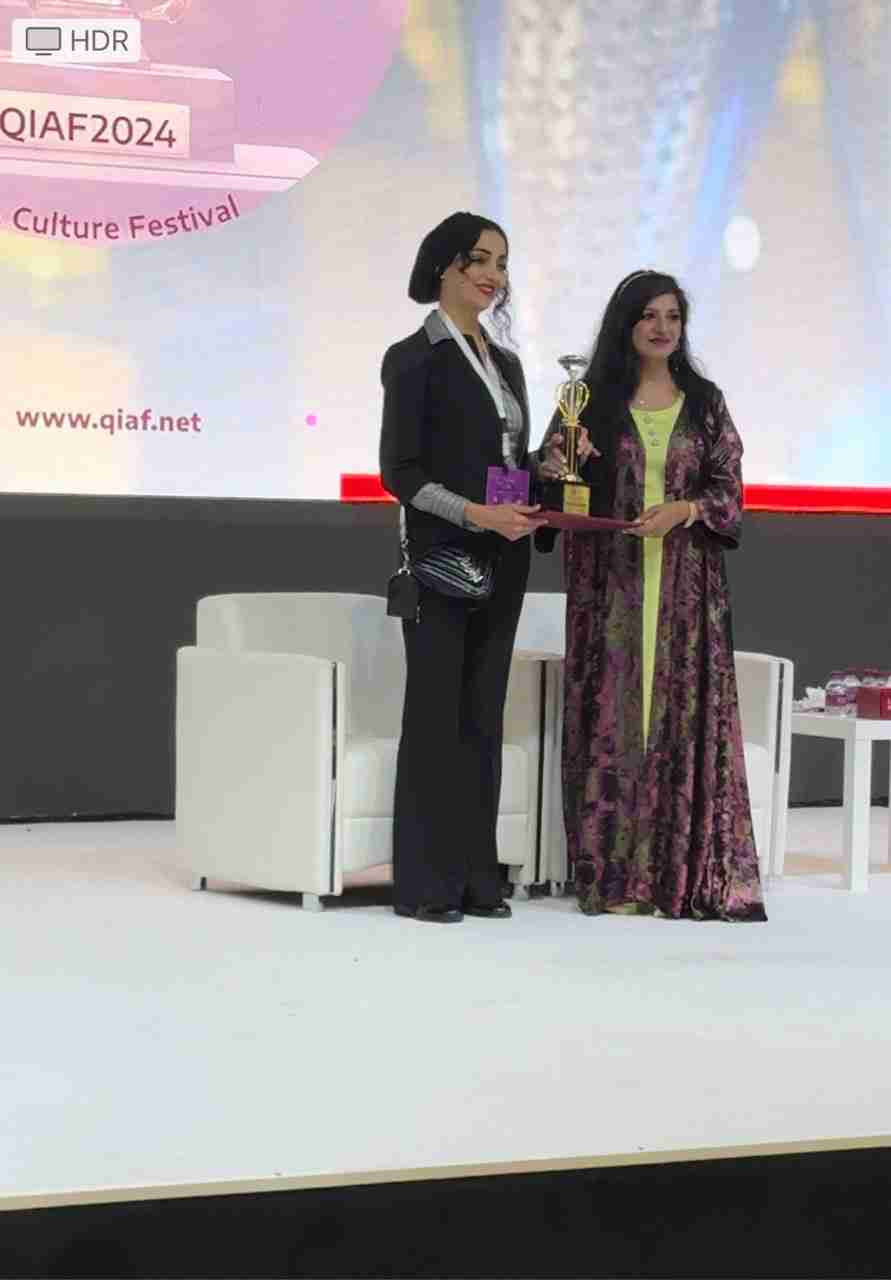
My participation in QIAF 2024 played a decisive role in shaping my return. That first experience taught me how international audiences pause, interpret, and emotionally respond to visual narratives. Returning in 2025, I arrived with greater clarity — not only about what I wanted to show, but why I was showing it. This awareness influenced every decision, from the selection of works to the way I positioned my artistic voice within the broader context of contemporary international art.
Three Paintings, One Cultural Pulse
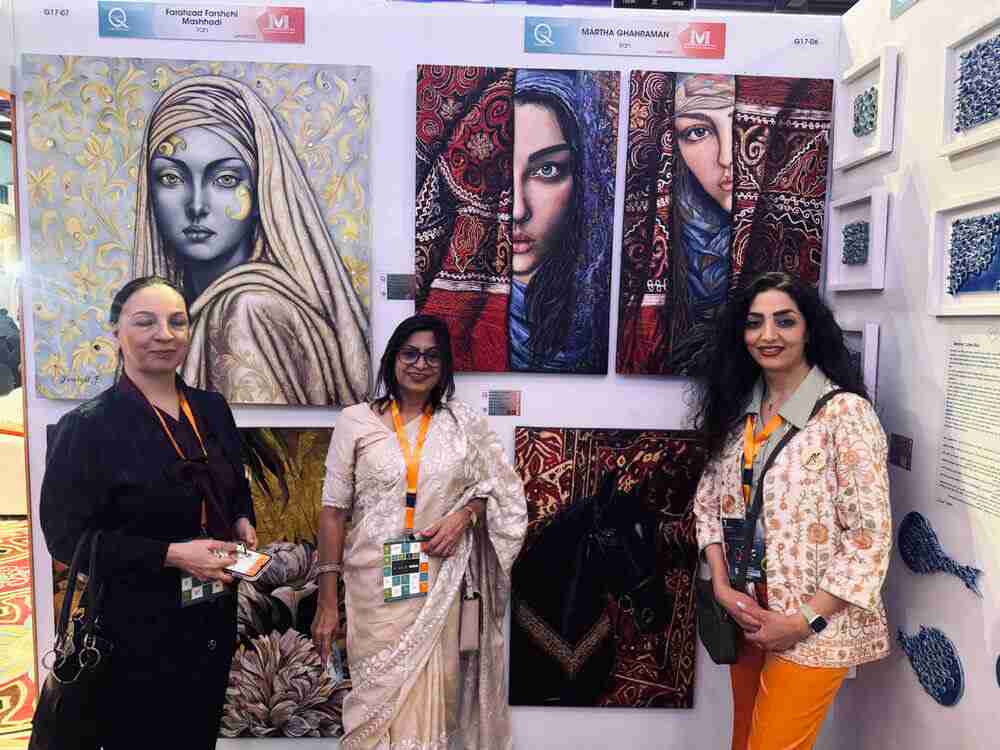
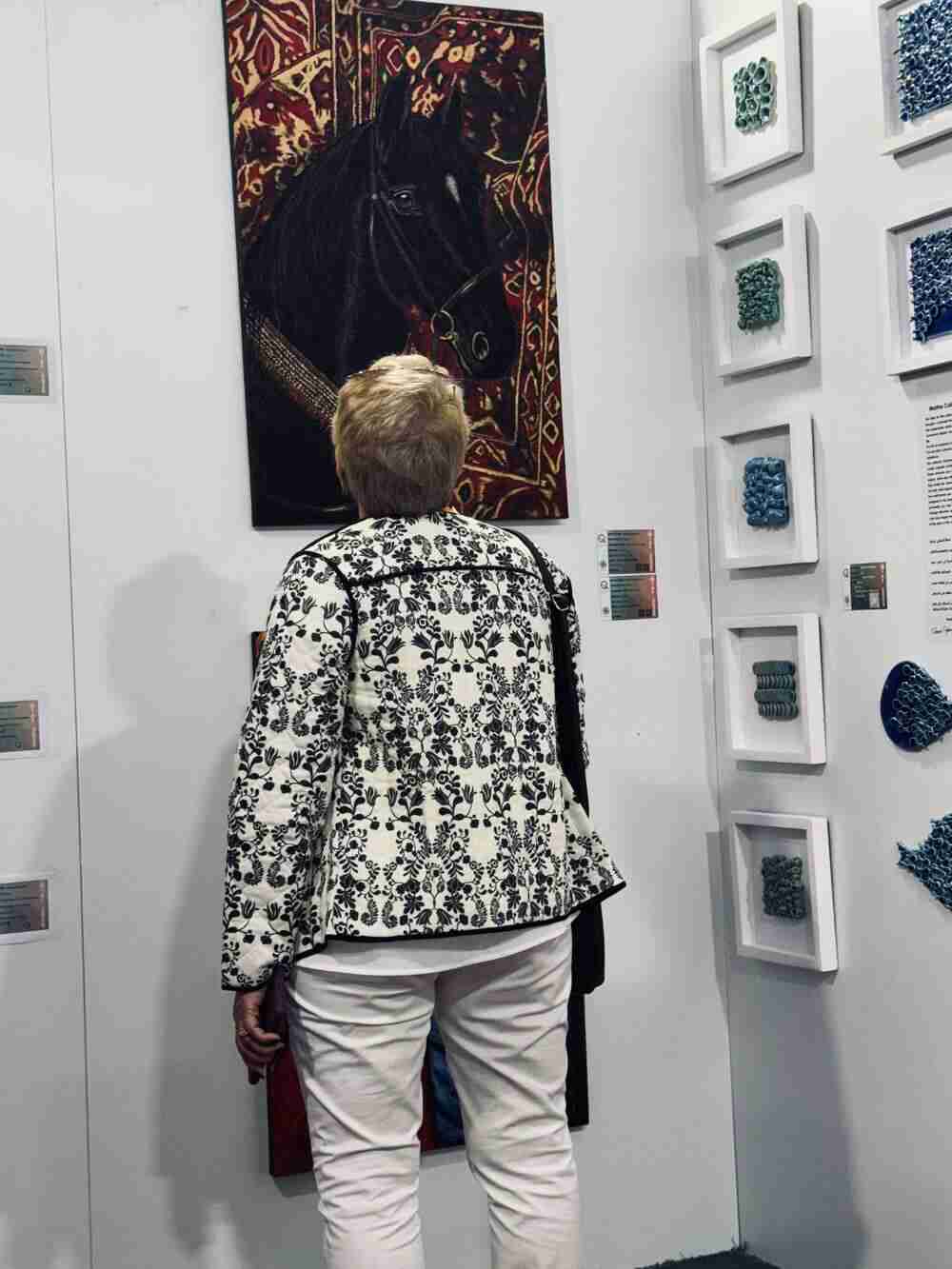
At QIAF 2025, I presented three paintings, each independent in form yet deeply connected through a shared conceptual core: the carpet as cultural memory, and the human figure as its living narrator.
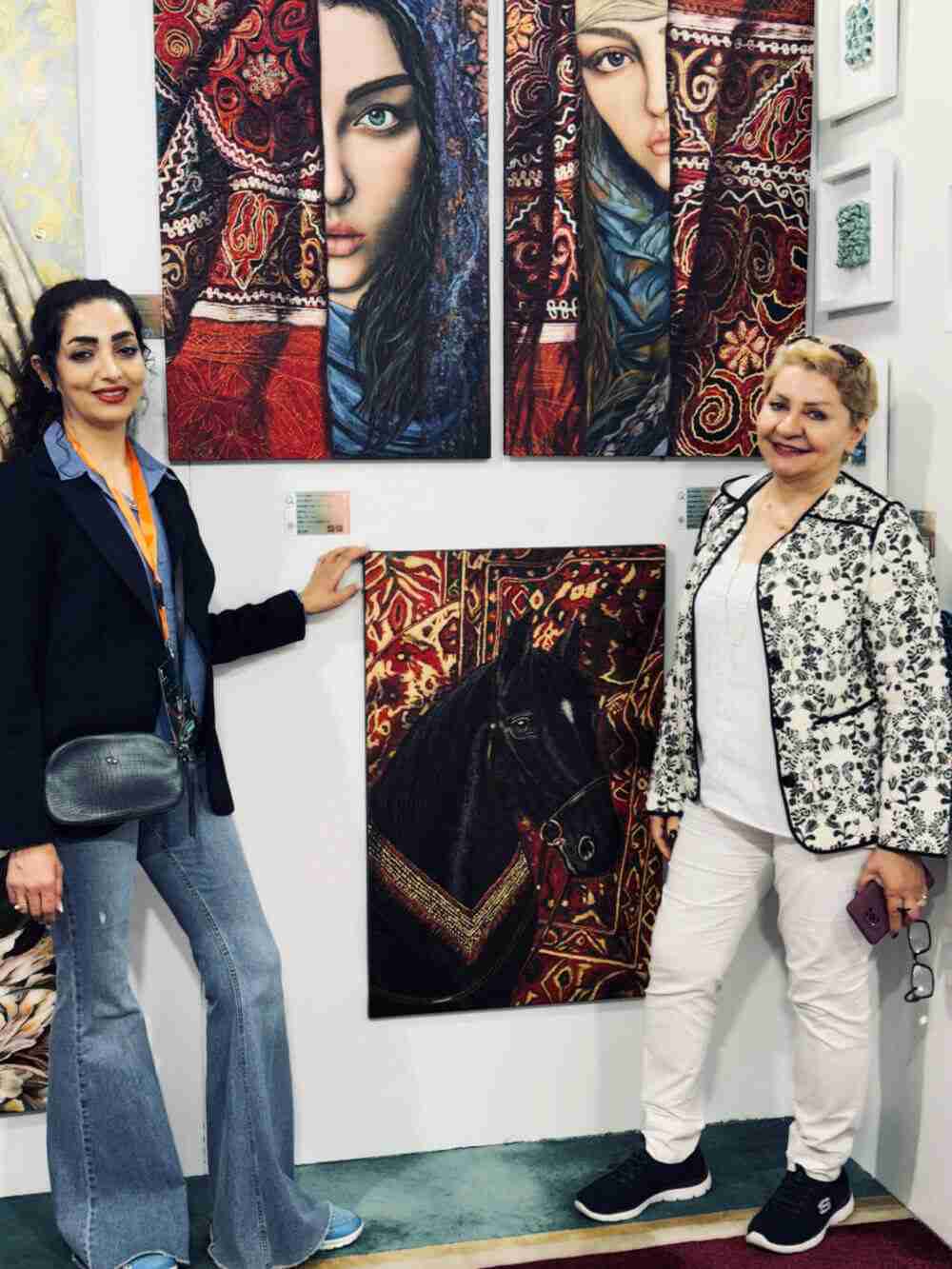
Majesty on the Carpet
This painting depicts a black horse standing beside a carpet. The horse, to me, symbolizes restrained power — dignity without spectacle. The carpet is not decoration; it is ground, heritage, and history. Interestingly, many international viewers connected instinctively with this work, even without direct familiarity with carpet symbolism. This silent recognition reaffirmed a belief I hold deeply: when imagery is honest, it becomes universally legible.
The Gaze of the Carpet
In this piece, a young woman stands behind a carpet, her gaze emerging through its woven surface. The carpet becomes both barrier and medium. This work reflects themes of female identity, visibility, and cultural layering. Visitors often lingered before this painting, absorbing it quietly. That pause — unprompted and unforced — is one of the most meaningful responses an artist can receive.
Woven Dream
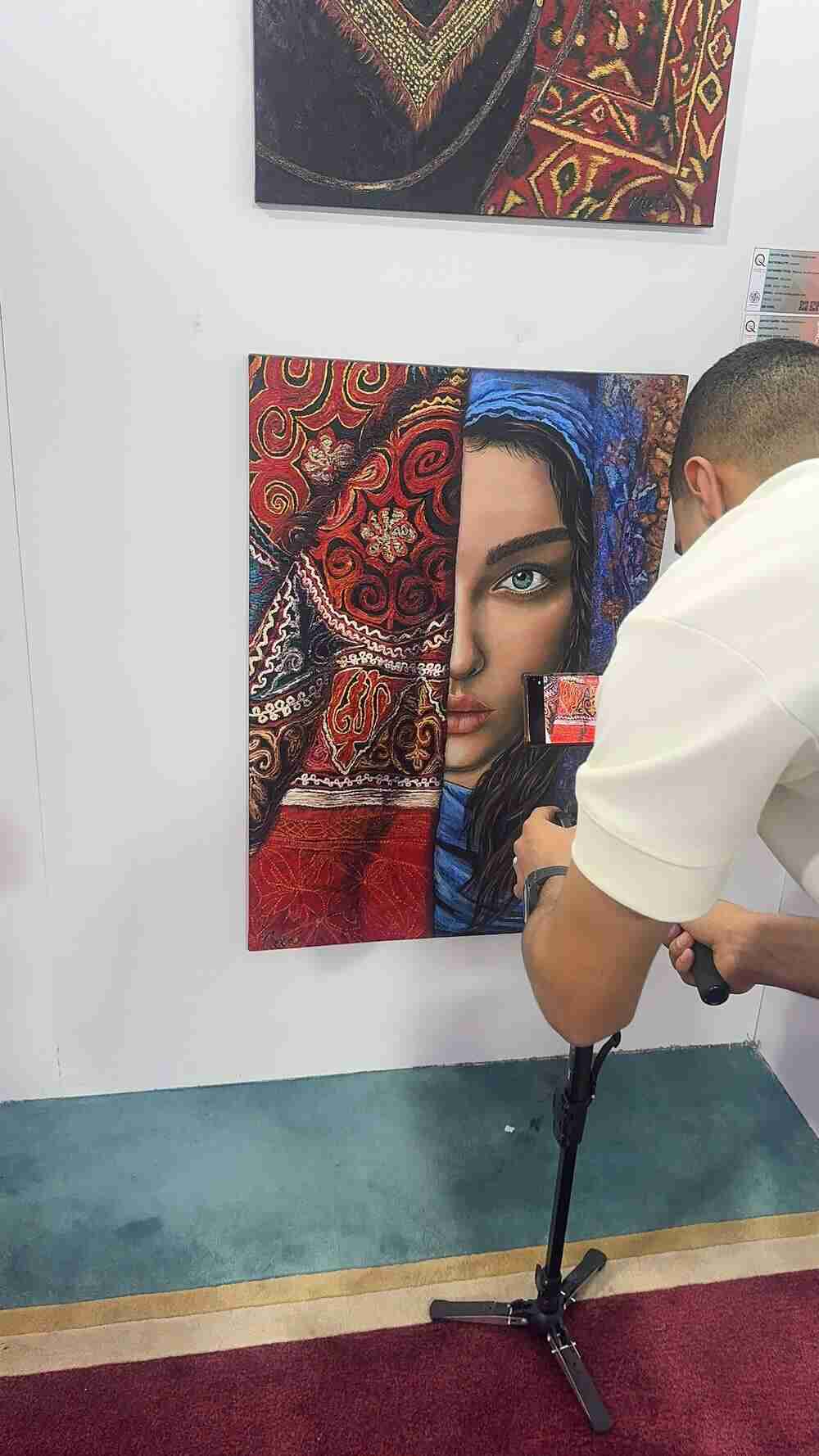
Half of a girl’s face merges with half of a carpet’s intricate texture. There is no clean division, just as there is no true separation between memory and identity. This was the most personal work of the series — a meditation on dreams, heritage, and continuity. Reactions to this piece crossed cultural boundaries with ease, confirming that emotional truth requires no translation.
The Festival as an Experience, Not a Schedule
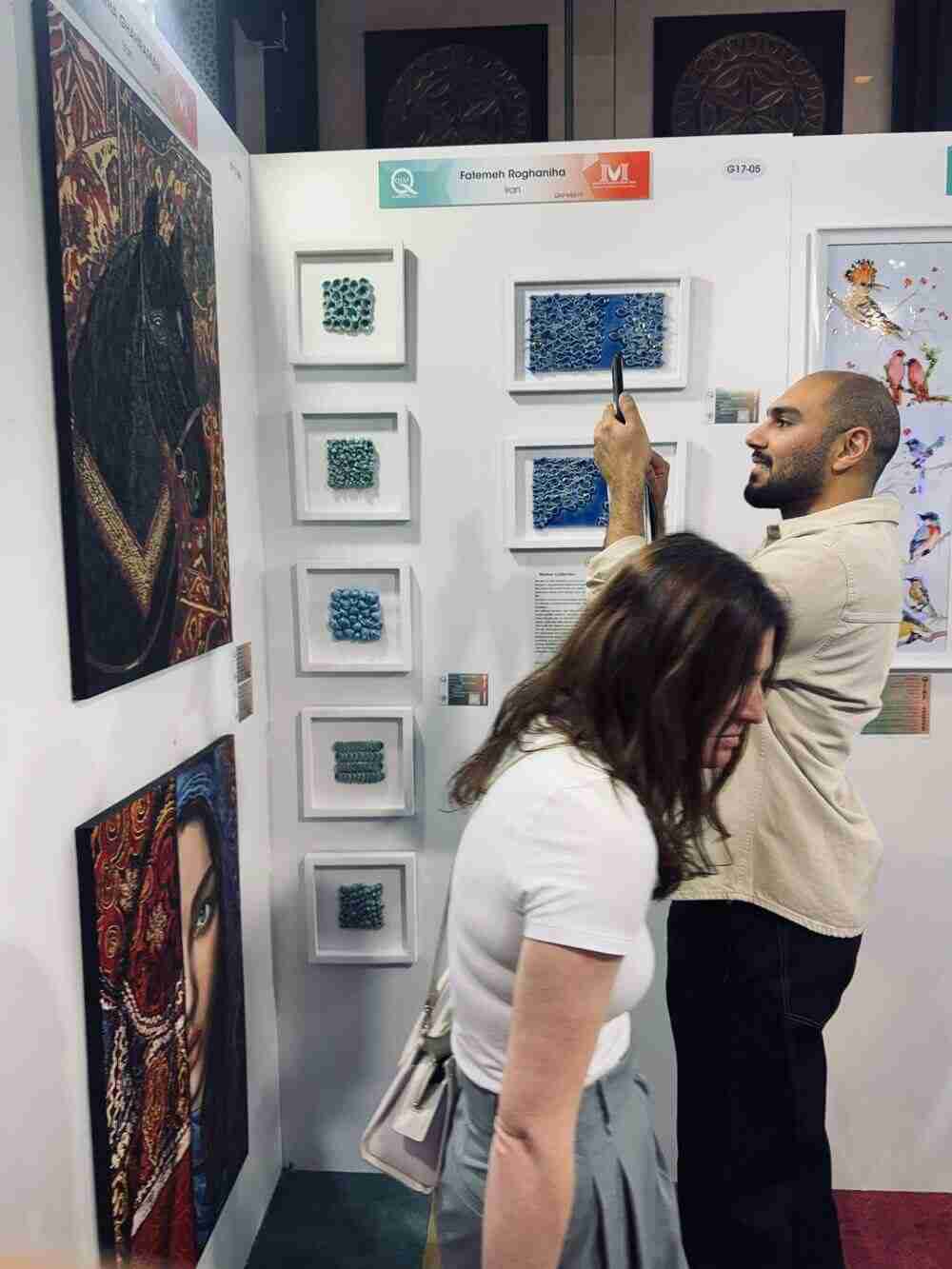
The structure of QIAF 2025 unfolded across six dynamic days, encompassing cultural tours, live art moments, conferences, workshops, master classes, and interdisciplinary events. While specific artist participation naturally varied, what remained constant was the festival’s ability to foster authentic artistic exchange. Some of the most impactful moments occurred not on formal stages, but in spontaneous conversations, shared reflections, and quiet observations between artists.
This is where QIAF excels: it creates an ecosystem rather than a checklist — a space where networking, collaboration, and cultural dialogue emerge organically.
Doha: A City That Thinks Visually
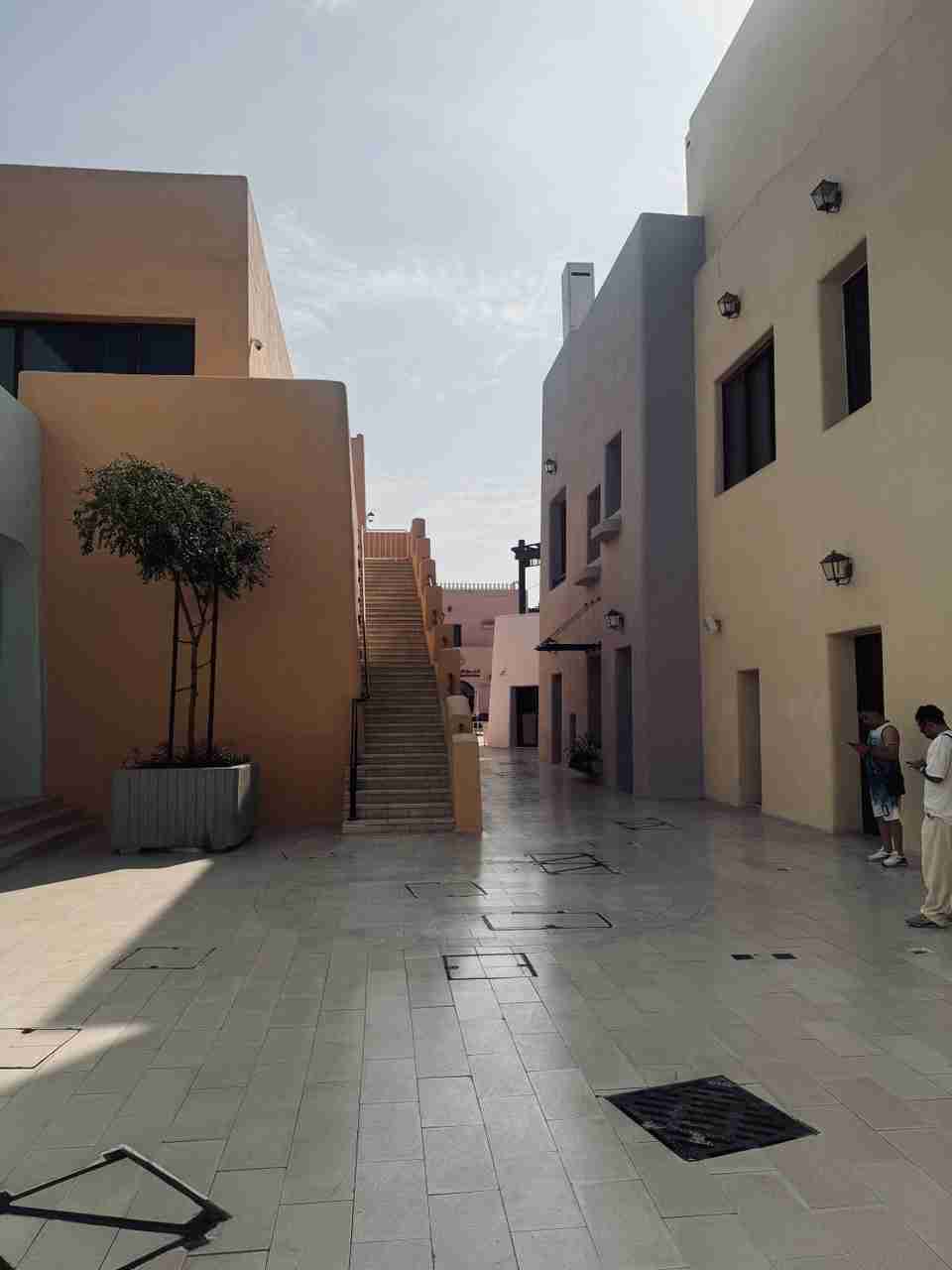
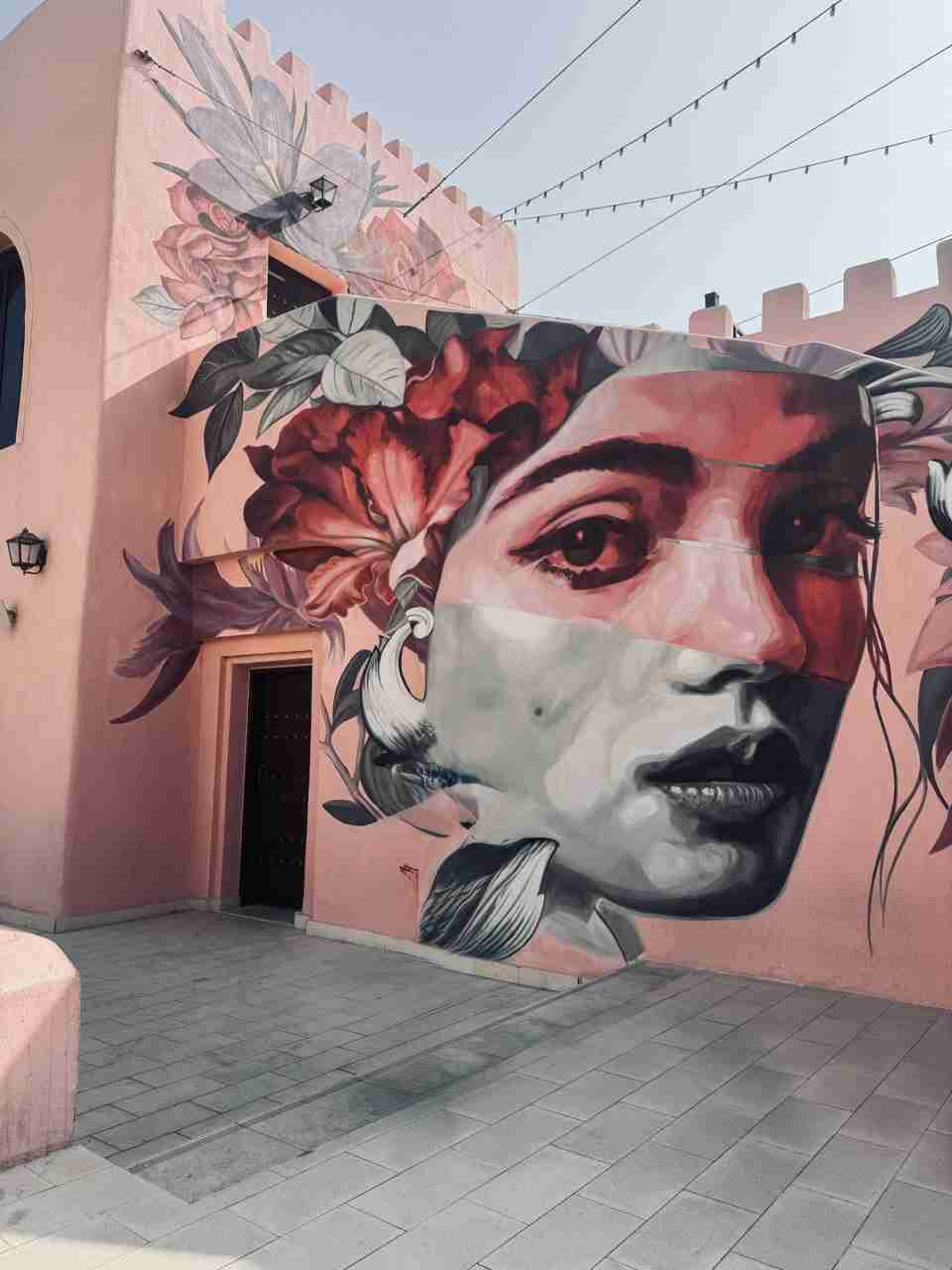
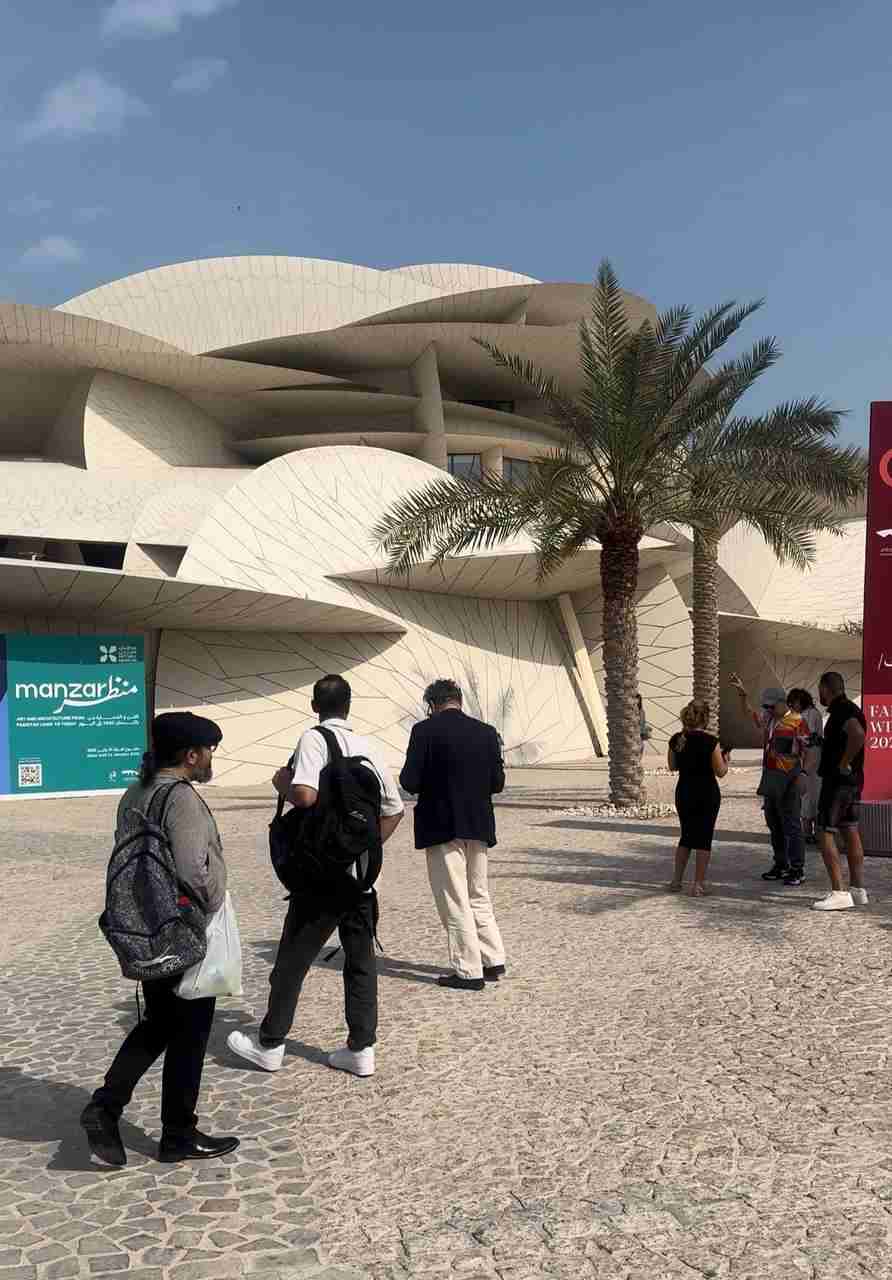
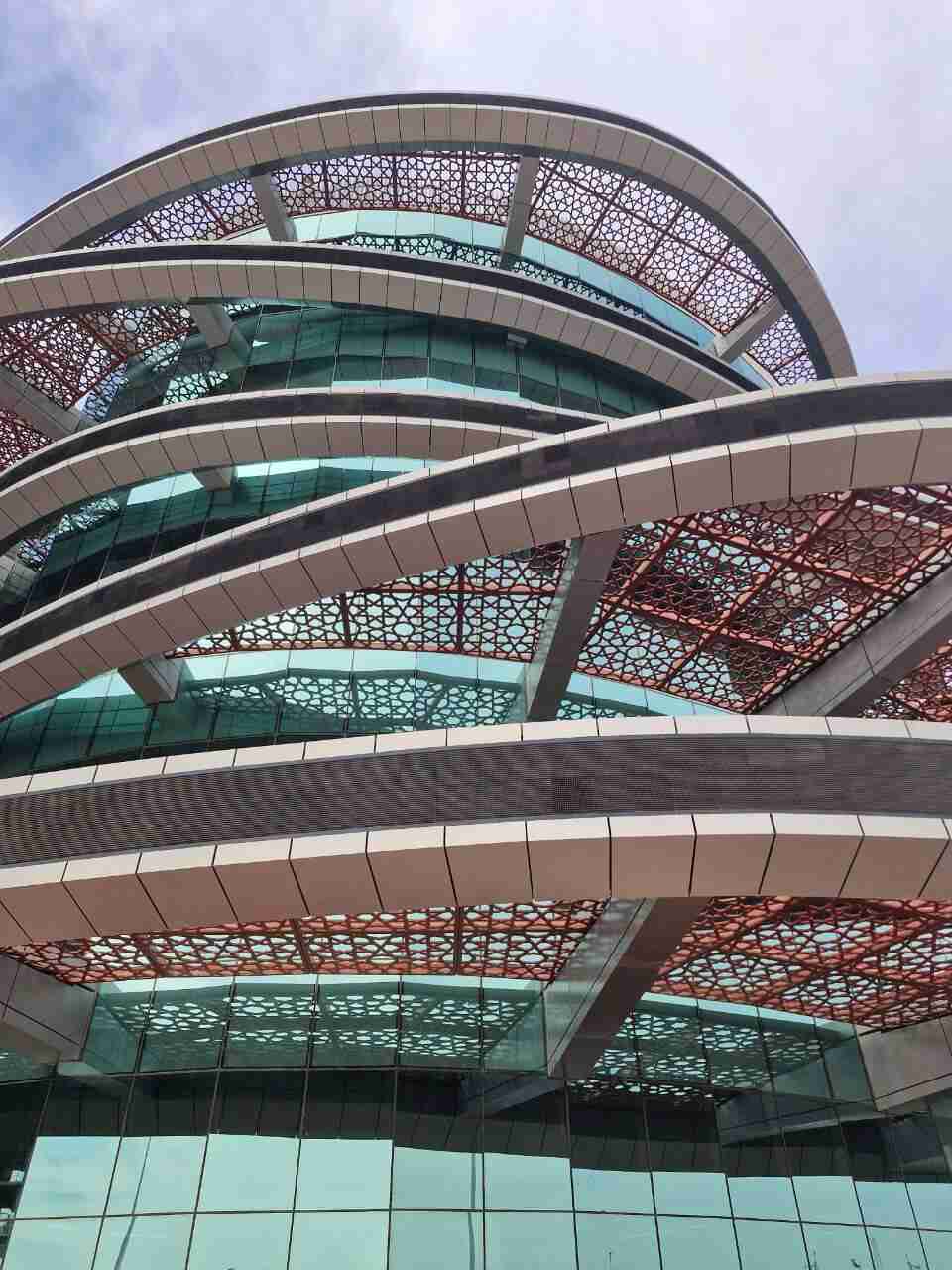
Beyond the festival grounds, Doha itself played an essential role in the experience. The city balances contemporary architecture with deep-rooted tradition, urban rhythm with the stillness of the desert. For a painter, this contrast is endlessly stimulating. Light, texture, scale, and silence coexist here in a way that naturally feeds the visual imagination. Qatar does not merely host art; it actively participates in its creation.
Recognition and Artistic Milestones
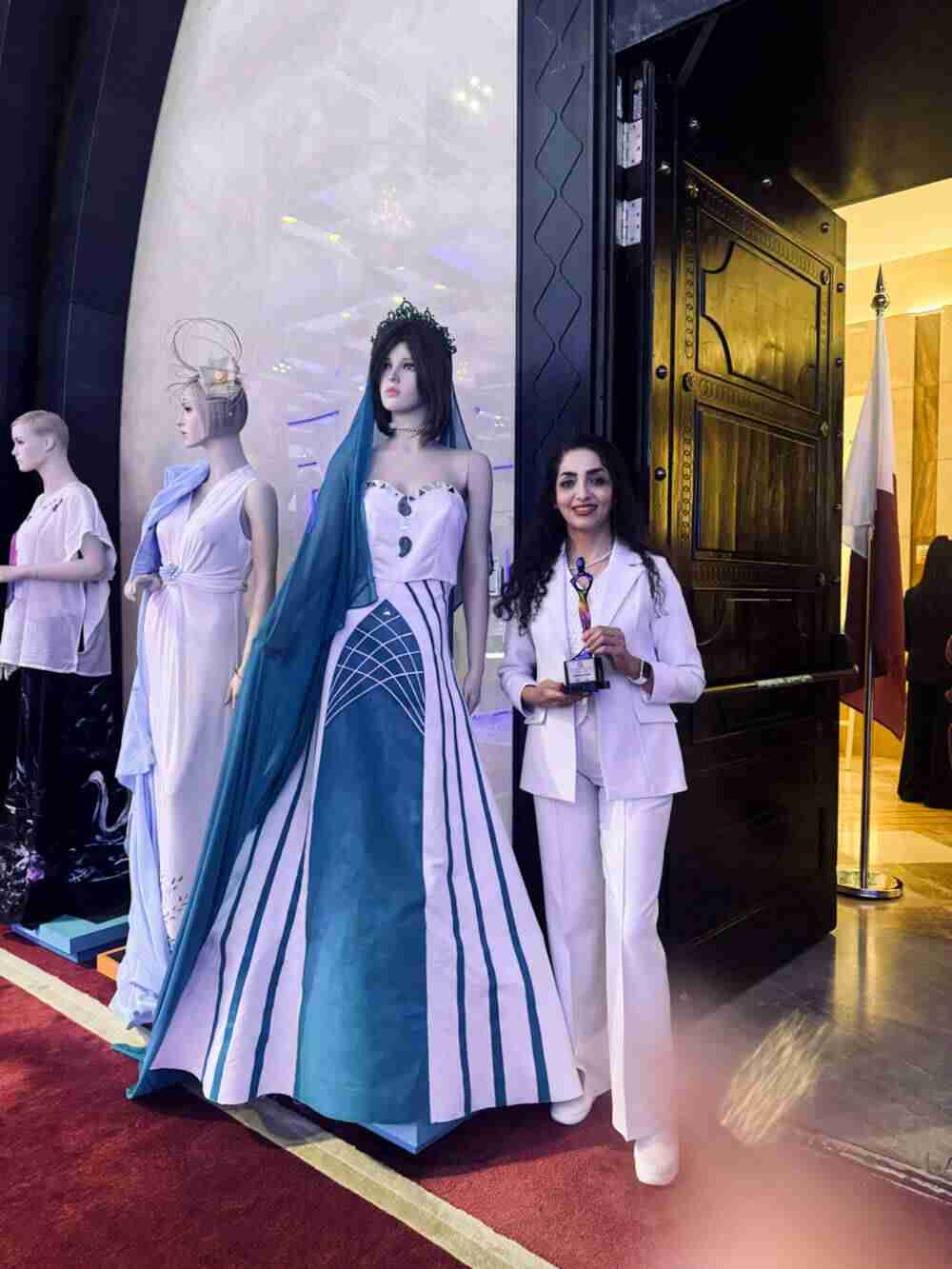
One of the most meaningful aspects of my participation in the Qatar International Art Festival 2025 was receiving the official Certificate of Participation. Far from being ceremonial, this certificate represents professional acknowledgment within a globally respected international art festival — a marker of active contribution and artistic credibility on an international stage.
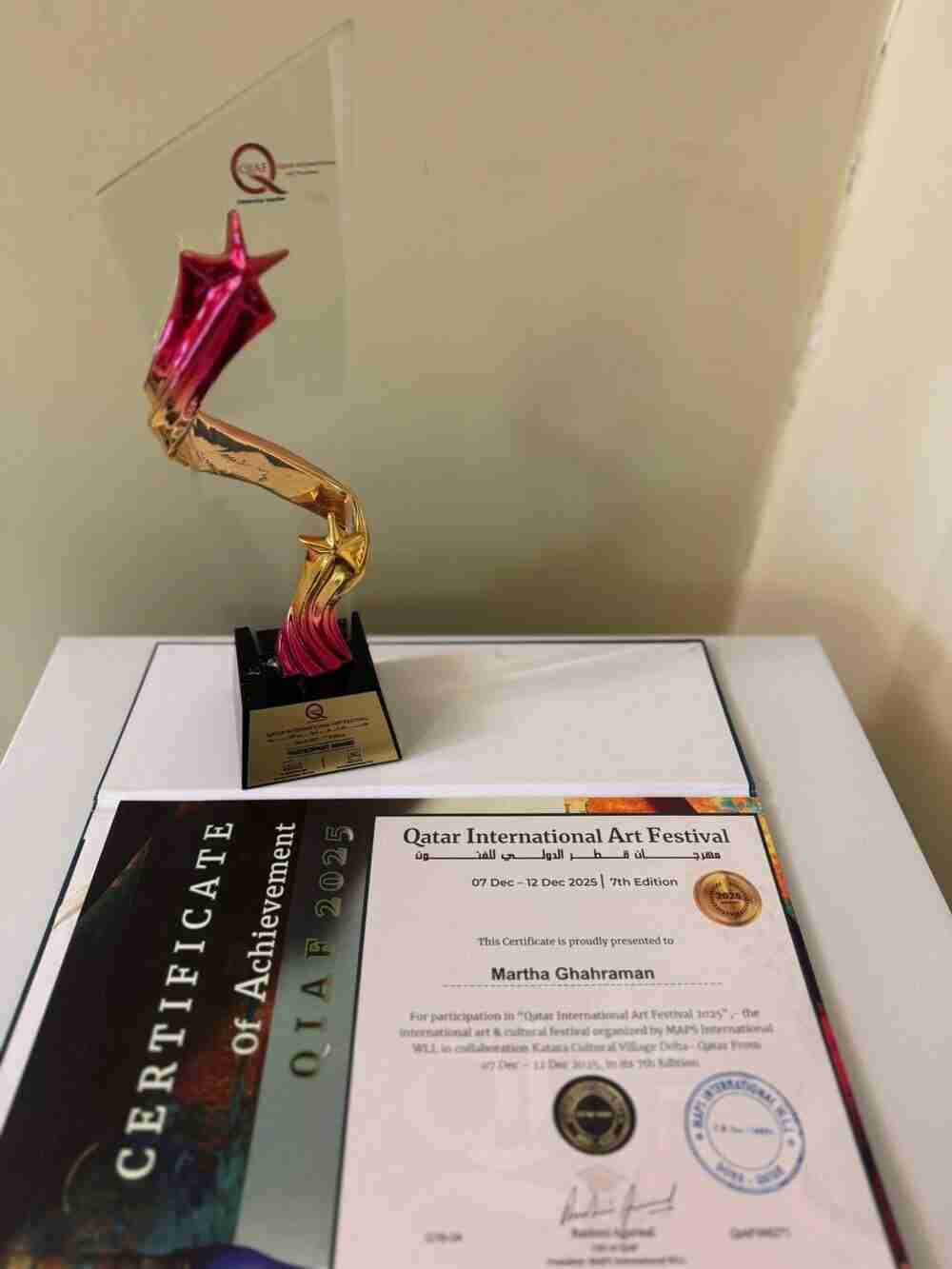
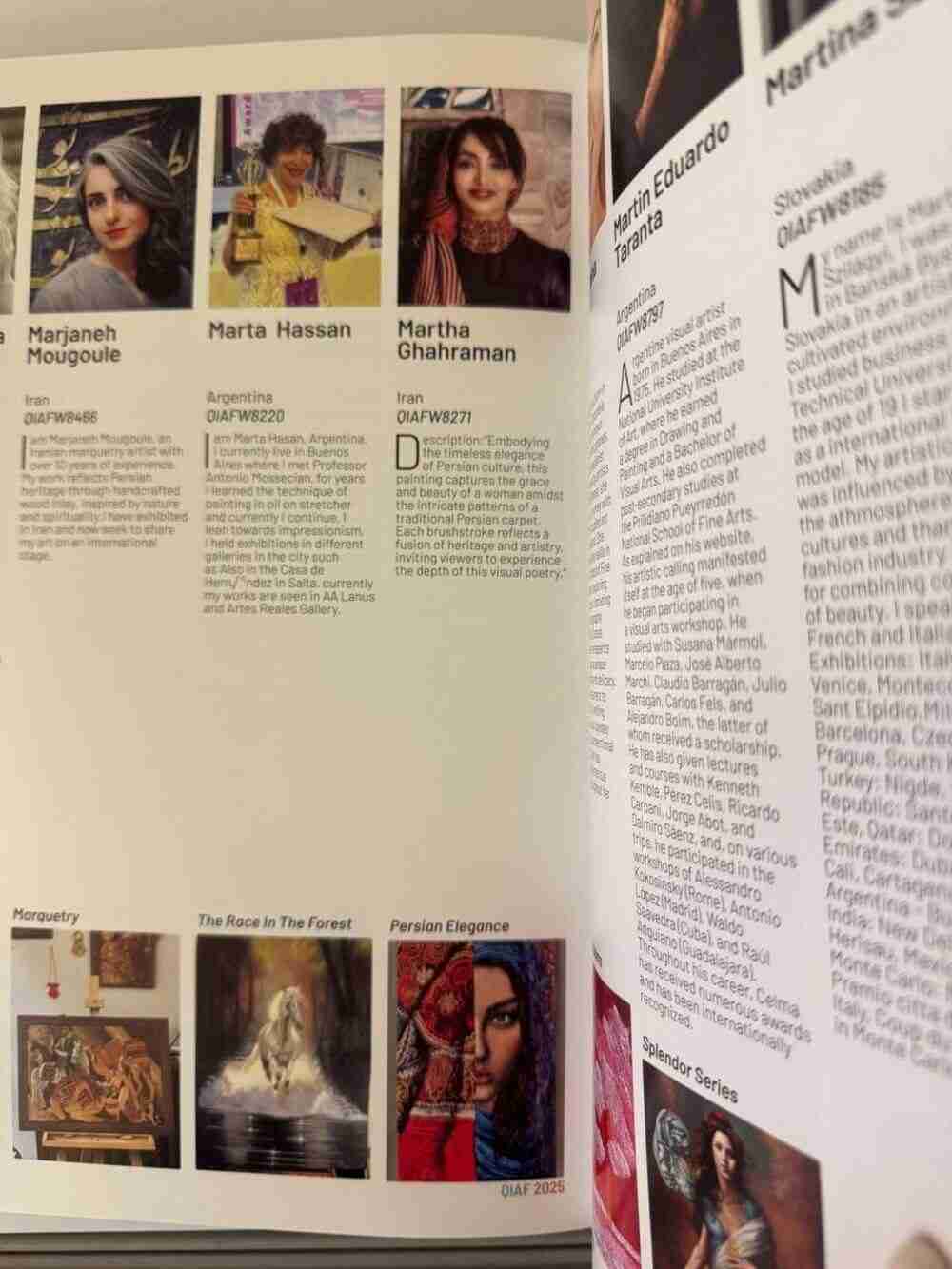
In addition, my name and artworks were published in the official QIAF 2025 Art Book, a curated volume documenting selected artists from around the world. This publication stands as a lasting archival record of contemporary artistic voices. I was also honored to receive the official QIAF commemorative trophy, a symbolic gesture that reflects continuity, dedication, and the evolving journey that began at QIAF 2024 and matured further in QIAF 2025. These recognitions are not endpoints; they are affirmations that the path remains open and meaningful.
Final Reflections: Why QIAF Matters
Participating once again in the Qatar International Art Festival 2025 reinforced a simple but powerful truth: contemporary art is still deeply capable of connection. It can bridge cultures, provoke reflection, and communicate without language. This journey was not merely about exhibiting three paintings — it was about reassessing direction, measuring resonance, and confirming that a personal visual language can speak globally.
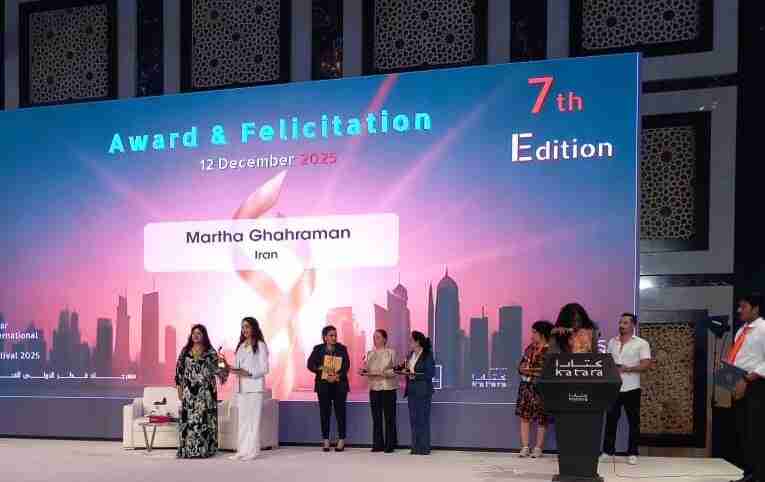
Some journeys conclude when the exhibition ends. Others quietly continue, shaping future work long after the walls come down. QIAF 2025 belongs firmly to the second kind.